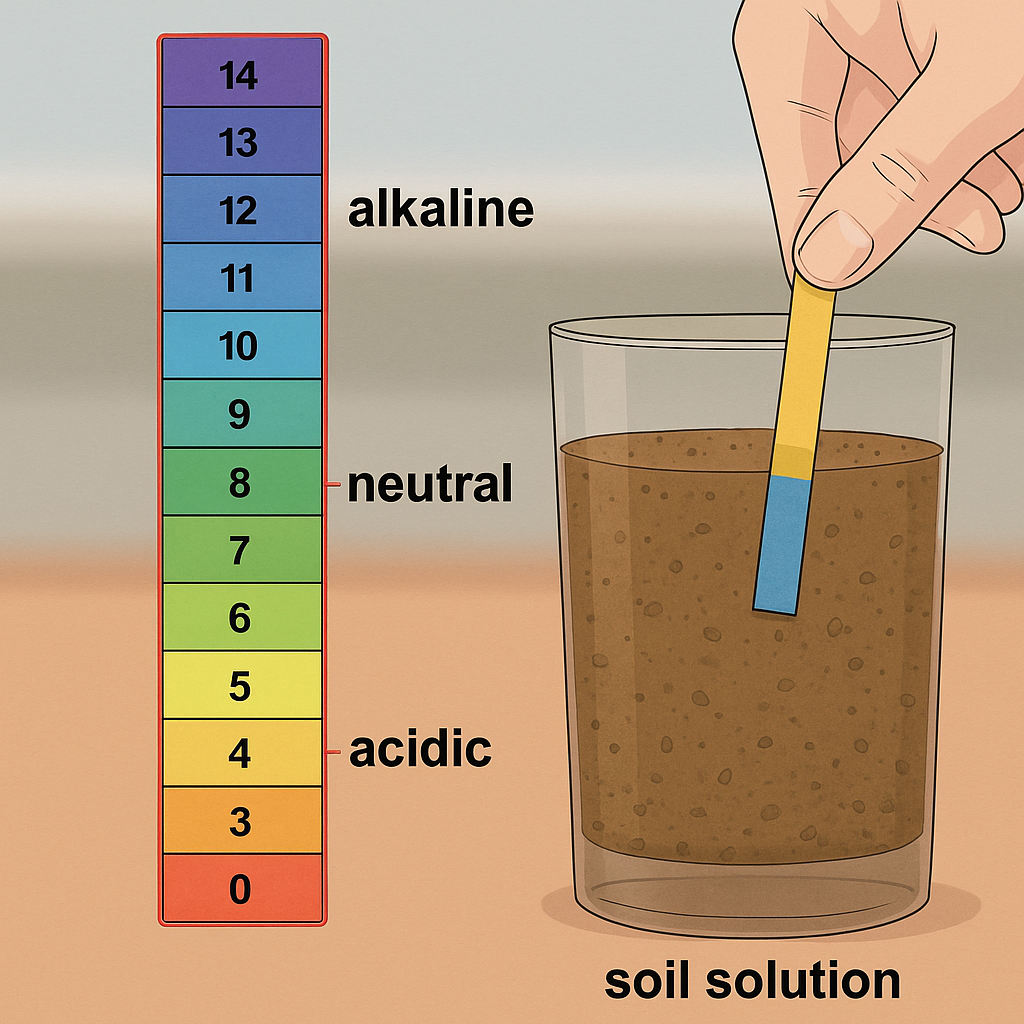
 Soil pH is the measure of acidity or alkalinity of the soil. Soil pH directly influences the availability of mineral nutrients, nutrient dynamics and biological process in the soil as well as the soil structure. It is an important parameter that influences other soil factors and by influencing the availability of mineral nutrients it directly affects the plant distribution as well as growth. The neutrality, acidity or alkalinity of soil differ in different sources of soils such as alluvial soil, farm soil, road side soil and pond soil, forest soil etc.
The pH range in soil normally varies from 3 to 9. Generally, soil pH between 6.0-7.5 is considered optimum for most plants, as most of the nutrients are available in this pH range. However, some plants may have soil pH requirement above or below this range. The desirable soil pH range for optimum plant growth varies according to their varieties. The toxic elements in soil get highly mobile under acidic conditions and leach into ground water and consequently taken up by plants and accumulated in their parts. Some plants also show inhibited growth due to increased aluminium toxicity under acidic condition. Soils having higher pH may also deficient in phosphorus and most micronutrients.
Soil pH is normally measured in a soil water suspension. The simplest method for estimation of pH range of soil is testing it with pH strip or with litmus paper. For accurate estimation of pH titration method and electrode sensor methods are followed.