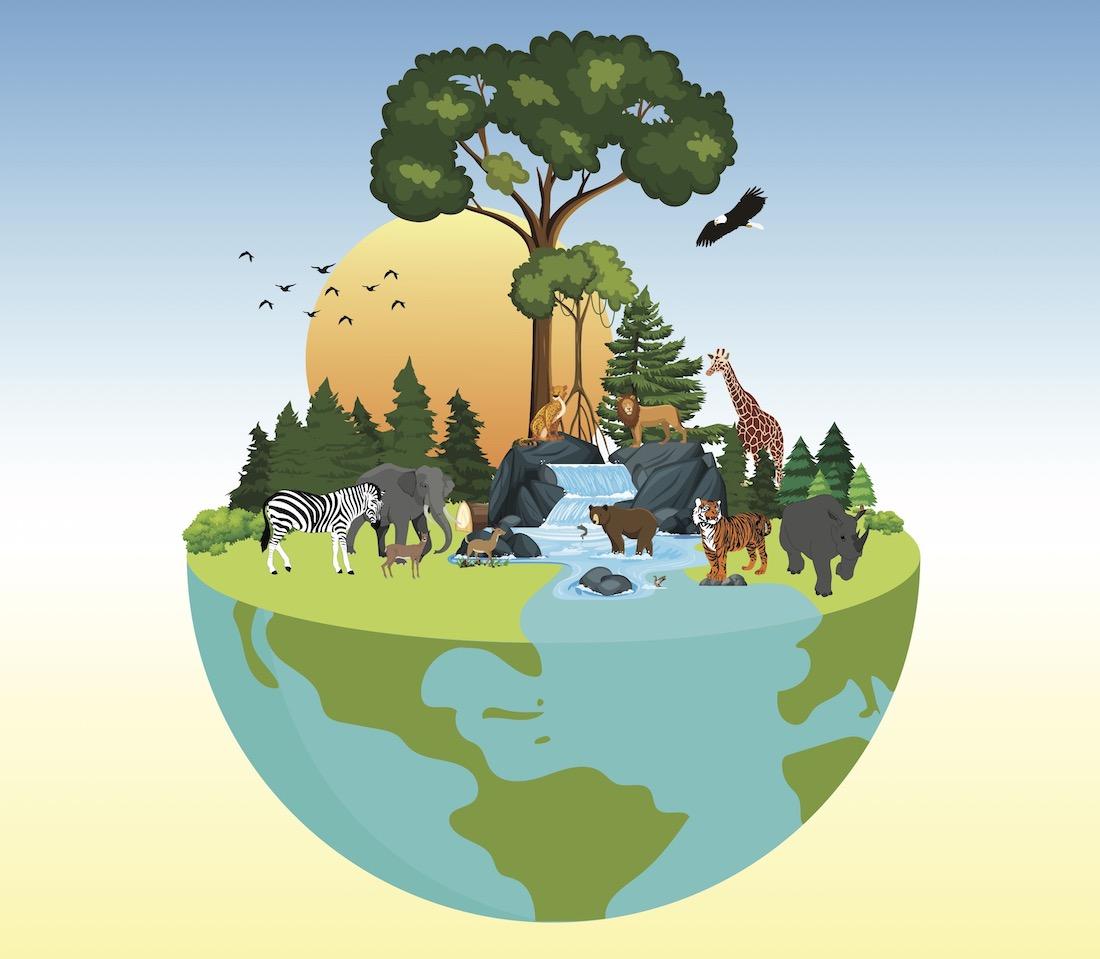
 Biological diversity (in short Biodiversity) is the term that is used to describe the types and combinations of the life forms on the Earth. There are life forms ranging from very minute microorganisms to multicellular small creatures to invertebrates to vertebrates among animals and unicellular photosynthetic organisms to multicellular algae to higher aquatic and terrestrial plants. Overall biodiversity consists of all types of life forms that are broadly differentiated into plants and animals, as well as those having both plants and animal characteristics and also those having different characteristics other than plants and animals.
In a time period of more than 3.5 billion years from early Precambrian era to till date different life forms have developed on the earth. Species that we see today are that have evolved from their ancestors and adapted to the current environmental conditions on the earth. We humans are also an integral part of the Earth’s biodiversity. It is believed that there could be up to 10 crore life forms on the Earth; while from statistical inferences it is considered that there are about 1.3 crore species on the Earth; but in actual, till date we have been able to identify only about 17.5 lakh species on the earth.
Biodiversity includes different forms of plants, animals, microorganisms but its actual scope is much wider. Different forms of life also have huge diversity at genetic level, i.e. different species also have genetic variations within them and these genetic differences within species further leads to wideness of biodiversity.
Apart from genetic variations another aspect of biodiversity the variety of ecosystems in which the life forms live. There are geographical and climatic variations in different parts of the Earth which we classify into forests, wetlands, mountains, deserts and many more types of ecosystems. In each ecosystem different species have different types of occurrences and distribution where they interact with each other and also with the local air, water, soil, weather conditions, physical forms, chemicals and gases around them.
Biodiversity is the combination of life forms, their interactions with each other, their interactions with environmental conditions and their own evolutionary process. Biodiversity is a major source of ecosystem services to us that help in sustaining our life. Biodiversity resources are the pillars upon which human beings have build their civilization.
Under this theme different activities are described under sub-themes that would help us in understanding the characteristics and functions of biodiversity, different life forms in different ecosystems, their forms and functions, their ecological characteristics and importance -