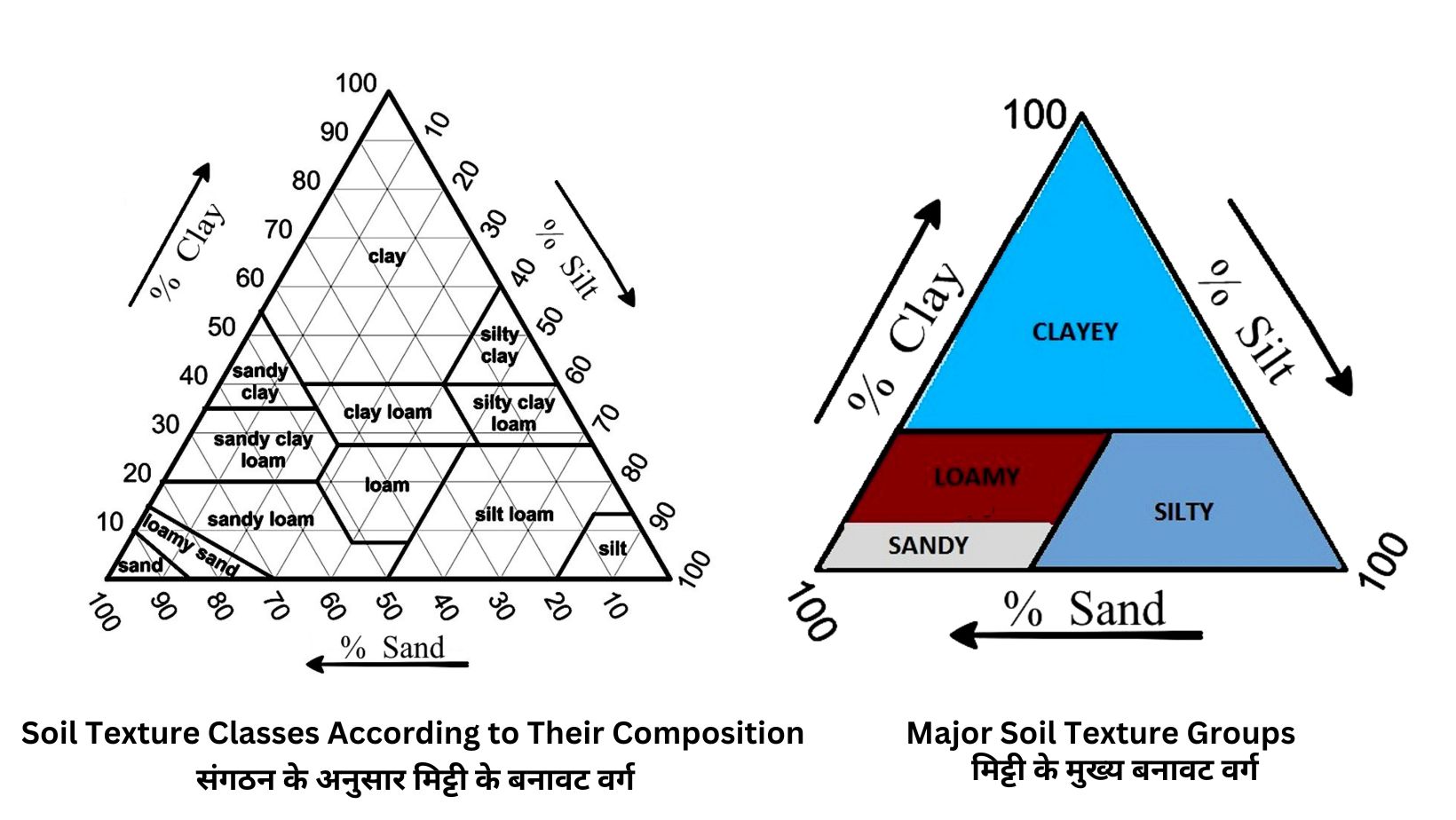
 Soil texture refers to the composition of sand, silt and clay sized particles in different proportions that make up the mineral fraction of the soil. Soil texture influences almost every aspect of soil use as well as in ecosystem services including the very important supporting services like biogeochemical cycles and soil formation etc. Soil texture greatly affects the soil-water relationships, gaseous exchange, retention of soil nutrients, mineral and humic compounds.
Soil texture is classified in various types according to the composition of differently sized particles. Major classes are Sandy, Loam, Clay, Loamy Sand (Silt), Sandy Loam, Silty Loam, Sandy Clay Loam, Silty Clay Loam, Clay Loam, Sandy Clay and Silty Clay.
There are various simple methods to know the soil texture in the field. For example, by taking the soil in hand and squeezing it into a ball, throwing the ball at a hard surface, crushing the ball etc; by pushing the soil into a ribbon between thumb and forefinger; by rubbing the soil; by mixing the soil in the water and after stirring the water letting the differently sized and weighed soil particles settle in different layers. There are other laboratory tests too to determine the soil texture, most common is the sieving of soil and estimating proportion of different sized particles to determine the texture class.
By collection of soil samples and examination of their texture one can prepare the soil texture map for an area. By understanding the soil texture types in an area one can also better understand the distribution of plant diversity, cropping pattern and nutrient status as well.